Turning a named account spreadsheet into a monitored territory
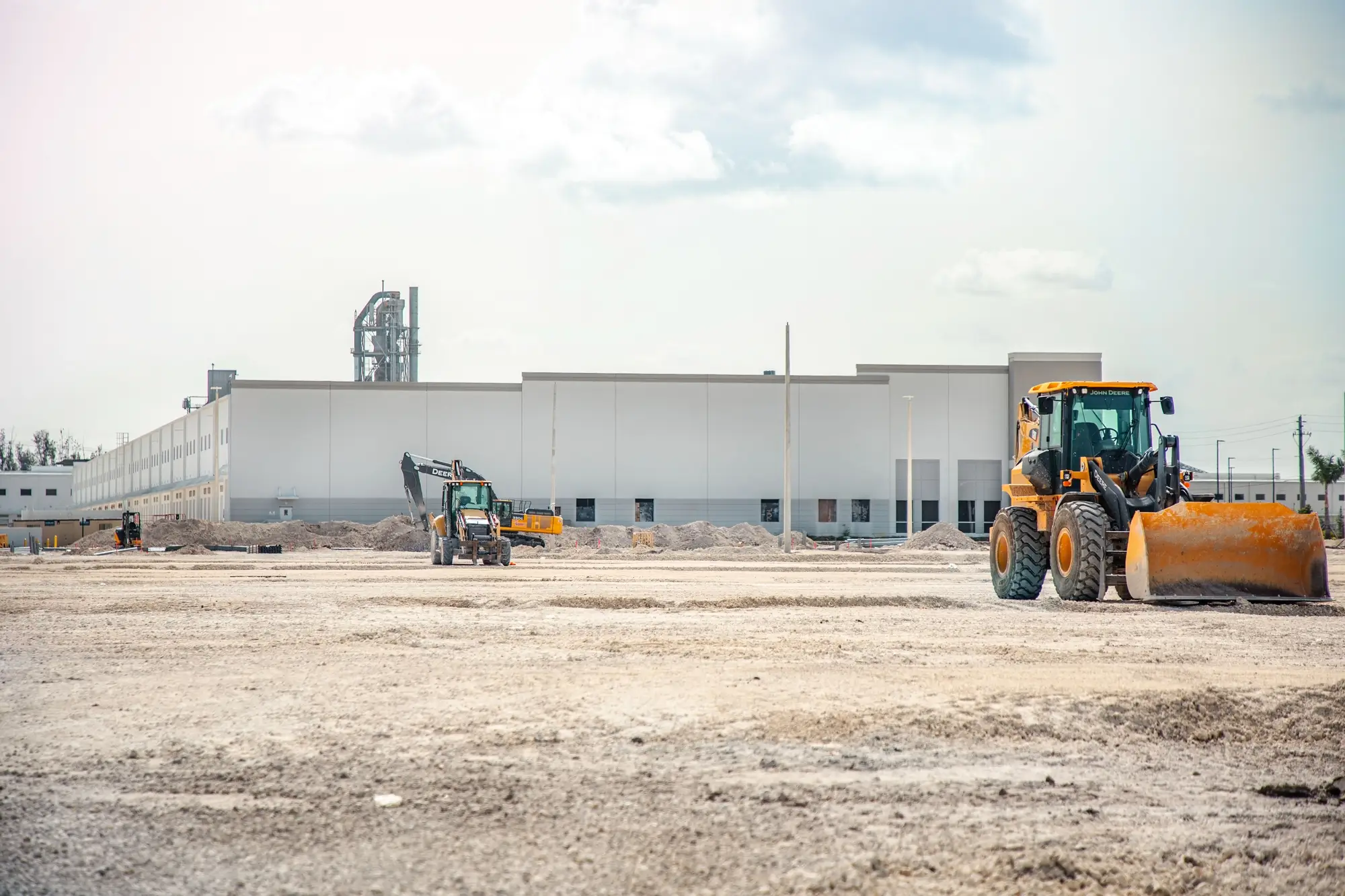
Every territory manager has the same tab open somewhere: a spreadsheet of named accounts, each row a company site, a region, maybe a tier. It's a good list. The problem is what happens to it after the quarterly review. Nobody owns the job of rechecking fifty or two hundred addresses every week for something worth a call, so the list sits there until someone happens to notice a competitor already closed the deal on an expansion that's been under construction since spring.
A named account list is a target. It isn't a monitoring setup. Those are different jobs, and most sales orgs only ever built the first one.
Why the spreadsheet stops doing its job
The spreadsheet is good at telling you who matters. It's useless at telling you when something changes. New construction on a named account's campus, a second building going up next to the existing one, a site that was vacant lot last year and has a cleared pad this year: none of that shows up in a CRM field someone fills in manually, because nobody's job is to drive by two hundred properties on a schedule.
What usually fills the gap is ad hoc: a rep hears something at a trade show, a Google Alert fires on a press release months after ground broke, an SDR stumbles onto a permit filing while researching something else. It's real information, but it arrives at random intervals and gets logged inconsistently, if at all. Two reps working the same patch might have completely different pictures of what's happening on their own accounts.
Setting up a monitoring layer on top of the list
Turning the spreadsheet into something that watches itself means adding one piece: a standing check against each named site or the whole territory boundary, run on a fixed schedule, that flags when something on the ground changes. That check looks at the physical site itself, independent of whether a press release or a sales call ever mentions it.
That's the setup Territory Watchlist runs: a weekly pass over a sales territory or a named-account list using high-resolution satellite imagery, flagging qualifying development events like new construction or a visible expansion as a dated alert. The account list stays the same list your team already built. What changes is that it stops being a static reference and starts throwing a signal when a site on it does something.
The setup looks like this:
- Keep the named account list as the source of truth for who's in scope. Nothing about the account structure or tiering has to change.
- Draw the territory or drop pins on the sites that matter: the HQ, the distribution center, the satellite office, whatever address is worth watching.
- Let the weekly pass run in the background. No rep has to remember to check anything.
- When a qualifying event shows up, it comes with a date attached, something your team can route straight into the CRM as a logged trigger instead of a verbal "I heard they're expanding."
That date matters more than it sounds like it should. A note that says "expansion observed, week of October 6" is something a sales ops manager can actually build a cadence around. A note that says "I think I heard something" isn't.
What counts as a trigger worth logging
Not every pixel change on a satellite image is worth a CRM entry, and the point of this kind of watch isn't to flood a rep's queue with noise. The events worth flagging are the ones that map to a real buying signal: new construction starting, an existing footprint expanding, a visible change to the site that suggests headcount growth, new capacity, or a facility coming online. Those are the things that, historically, turn into a budget conversation six to eighteen months later, and they're exactly the things a spreadsheet review never catches because nobody's physically checking the property.
The imagery runs at a resolution fine enough to pick up a new building pad or an added structure, refreshed weekly, in standard RGB. What it delivers is a dated record: a cleared pad where there wasn't one last month, a new roofline next to the existing building, a parking lot poured where the site used to be open ground. Whatever the new building turns out to hold, or whatever the company plans to do with it, becomes the conversation your rep has after that, not before.
If the account list already exists and the gap is someone watching it on a schedule, that's the piece worth adding next.