How to brief an account executive on a new site alert before the QBR
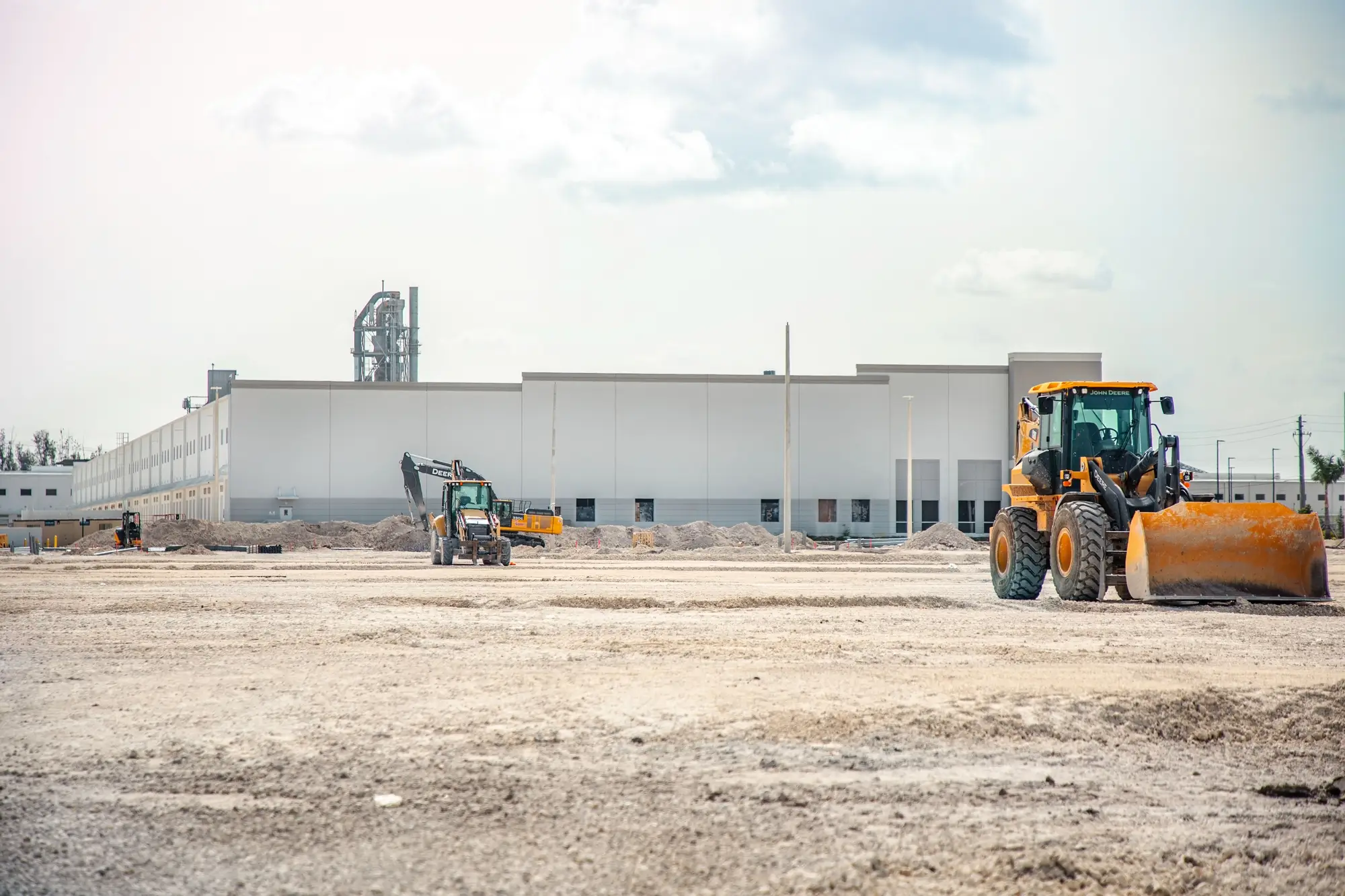
You've got the alert sitting in your inbox: new construction on a named account's site, dated two weeks ago. The QBR is Thursday. The AE who owns that account hasn't seen it yet, and if you just forward the email, it either gets buried under forty other things or shows up in the room as a vague "oh, I think something's happening at their Plant 3" comment that goes nowhere.
A development event is only useful if it survives the trip from your screen to the AE's talk track. Getting it there in a usable form is the real work.
Lead with the date, not the headline
AEs get pitched "big news" constantly. What they don't get enough of is a specific date attached to a specific parcel. Don't open with "looks like they're expanding." Open with "new foundation work started the week of the 12th, confirmed again this week, nothing on their last earnings call about it." The date does two things a headline can't: it tells the AE how fresh the signal is, and it gives them something concrete to drop into a conversation without sounding like they're guessing.
If your account list spans a territory and you're checking it by hand, this is exactly where things slip. A spreadsheet with forty rows doesn't tell you when something changed. It just sits there until someone remembers to look.
Translate the site event into an account signal
What matters to an AE is what a tilt-up concrete pour means for the deal, not what it looks like from above. New construction at a distribution site usually tracks to a capacity decision made months earlier, which means budget already exists somewhere upstream. A paved lot where there used to be a gravel staging area suggests a facility moving from temporary to permanent. An idle site with equipment sitting unmoved for three straight weekly checks is the opposite signal, and worth flagging just as loudly.
Write one line that connects the physical change to a business reason. "New expansion footprint, consistent with the Q2 hiring posts they ran for the regional DC" is a sentence an AE can say out loud in a discovery call. "Satellite imagery shows ground disturbance" is not.
Put it where the AE actually looks
The alert belongs on the account record, tied to the opportunity or the account plan, not floating in a side channel. If your CRM has a field for dated triggers, use it. If it doesn't, create a simple convention: event date, site, one-line translation, suggested next step. Consistency matters more than formatting. An AE who knows exactly where to check for site activity on their named accounts will check it before every call. An AE who has to remember which Slack thread it was in won't.
Give the AE one line, not the full file
Resist the urge to hand over everything you've got. A QBR slide with five data points about a site change reads like clutter. One sentence, delivered with a date attached, reads like intelligence. Save the supporting detail for if someone asks a follow-up question.
Time it to the agenda, not to when you found it
If the alert lands on a Tuesday and the QBR is Thursday, don't wait for a scheduled sync to mention it. A two-line message to the AE, with the date and the one-sentence translation, beats a perfectly formatted report that arrives after the meeting already happened. The value of a development event decays fast. Treat the briefing the same way you'd treat a hot lead: get it to the person who can use it while it's still current.
None of this works if the underlying watch is inconsistent. Checking a territory manually means some accounts get looked at weekly and others get forgotten for a quarter, and the AE has no way to know which is which. A standing weekly watch on the sites in your territory turns that into a routine: the same accounts checked the same way every week, with qualifying events pushed out as dated alerts your team can route straight into the CRM instead of hoping someone remembers to look.
Next time a site alert lands before a QBR, give it a date, a one-line reason, and a home in the account record, then let the AE run with it.